

1. Definition: What is a web application?
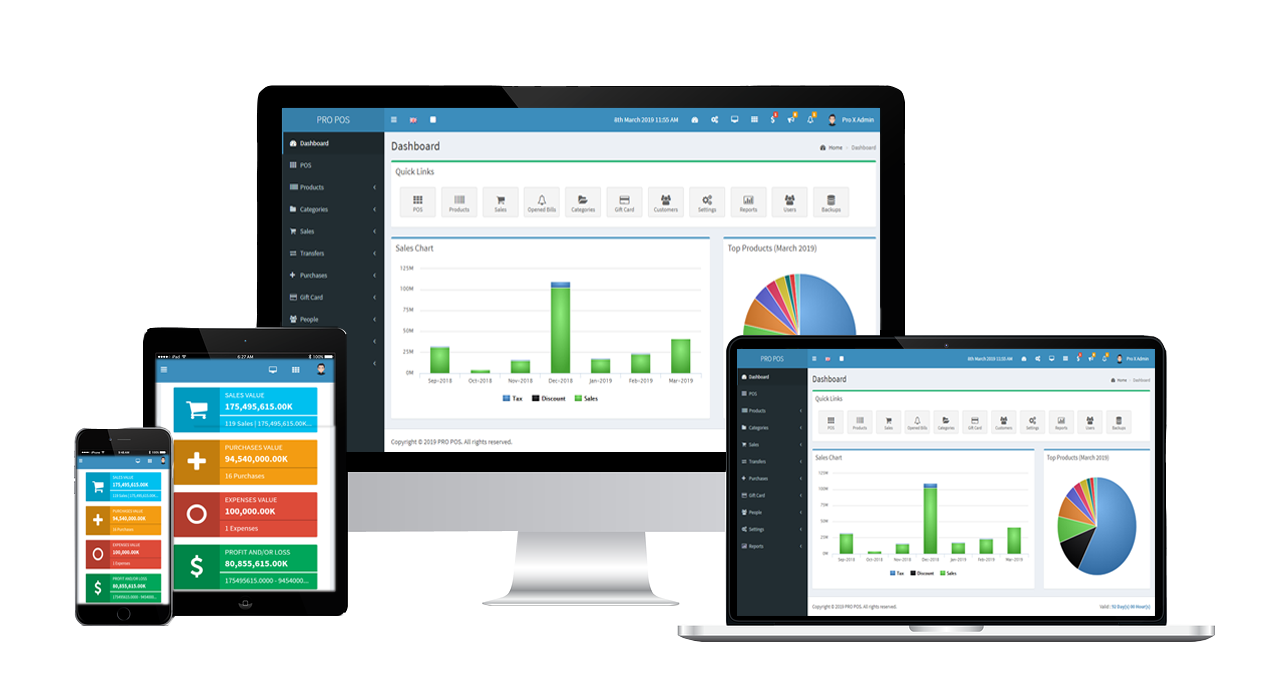
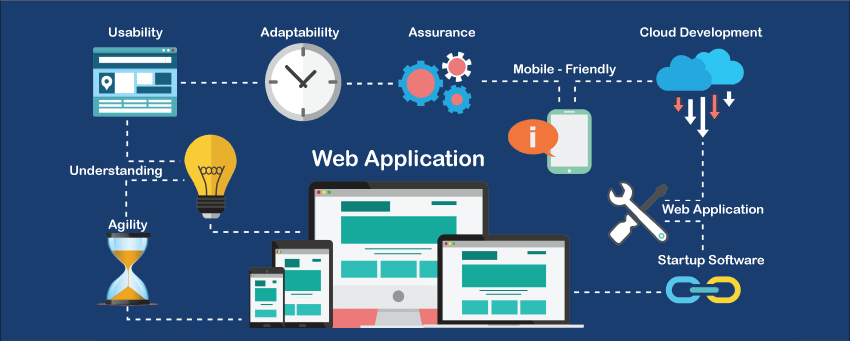
A web application (or application site) is a website that is interactive and functional designed to perform dynamic actions, often tailored to each user. It is no longer simply a matter of viewing content, but of interacting with data, saving information, processing actions, accessing personal spaces, and so on.
In other words, it is software accessible via a web browser, mais qui se comporte comme une vraie application.
Concrete example: A hair salon in Conakry can showcase its services, opening hours, customer reviews, and booking form—all on a single, fluid page that can be viewed in less than a minute.
2. What is the difference between a showcase website, an e-commerce website and an application website?
When people talk about creating a website, many immediately think of a showcase site or, sometimes, to an e-commerce website. However, these two formats cover only some of the possible uses. The application site, on the other hand, follows a different logic: that of theadvanced interaction and the management of complex business processes. Understanding these differences enables you to choose a solution that is truly tailored to your needs.
2.1 The showcase website: to showcase your business
A showcase site is comparable to an online business card. It usually consists of 3 to 5 static pages (Home, About, Services, Contact, and sometimes Testimonials or Gallery). Its main purpose is tobe visible, reassuring and easy to reach. It is often the first step in a professional online presence, especially for local businesses that want to appear on Google rather than relying solely on social media.
This type of website is ideal for:
• Tradespeople (plumbers, electricians, carpenters, etc.),
• Liberal professions (lawyers, consultants, etc.),
• Small businesses that simply want to be found on Google.
Example : A travel agency in Conakry displays its main offers, contact details and a simple contact form for receiving enquiries.
Limits : the showcase website remains informative. It does not allow you to manage user accounts, store data or automate tasks. As soon as the task requires more advanced interactions, this format becomes inadequate.
👉 Are you interested in a showcase website? Find out how CondeL Tech can help: Website design.

2.2 The e-commerce website: for selling online
The e-commerce website is a tool that is transactional. It allows you to:
• To showcase products or services,
• Add them to a cart,
• Place an order, providing your contact details and choosing a delivery method,
• And pay online or offline (Mobile Money, cash, etc.).
Learn How to launch an e-commerce website in Guinea.
This format is particularly well suited to retailers, shops, local producers and caterers who wish to sell online, whether to individual customers or to other businesses. It also allows sales to be organised as a complement to social media, as sell exclusively via Facebook can quickly become time-consuming and disorganised.
A good idea : A natural cosmetics shop in Conakry sells its products online, accepts payments via MTN or Orange Money, and takes orders even at 2am.
Limits : the e-commerce site is sales-focused. It is not designed to handle complex databases, members, training courses or customised internal processes. For these requirements, a different approach is needed.
👉 Are you looking to get started in e-commerce? CondeL Tech is here to guide you: E-commerce Website Creation.
2.3 The application server: for running specific processes
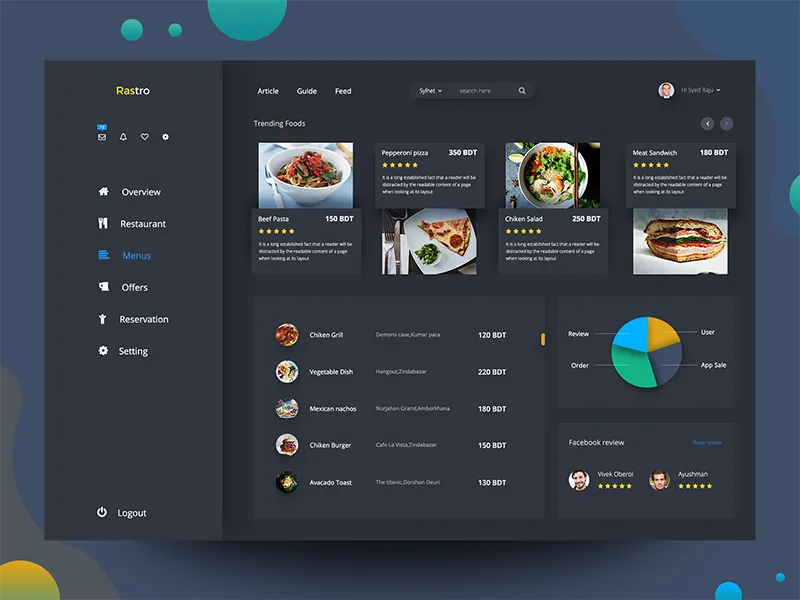
A application site is a dynamic, customised website designed to meet a specific need: automate a process, manage complex data or coordinate the work of several users.
In practical terms, this means that:
• Each user can have a role (e.g. administrator, manager, client, teacher, candidate…),
• Interactive forms allow you to create or edit data (e.g. submit an application, book a room, report an activity…),
• Dashboards allow you to view reports, view statistics, and generate documents (PDFs, invoices, certificates, etc.),
• The site can be linked to other tools (email notifications, WhatsApp, calendar synchronisation, etc.).
Example : An NGO has launched a platform where candidates submit their applications, managers assess the profiles, notifications are sent automatically, and each stage is monitored via a secure dashboard.
Limits : the application requires a more advanced development and a clear understanding of business requirements. It is not always essential for a simple operation, but becomes crucial as soon as manual management reaches its limits.
3. Practical Examples of Web Applications
Web applications are not “generic” websites. They are order made, depending on the specific needs of an organisation, a role or a process. Here are three practical examples to help you better understand how they can be useful.
3.1 A recruitment portal with application management
For a business, an organisation or an NGO, managing job applications via email can quickly become chaotic: lost attachments, duplicate submissions, a lack of visibility regarding the applications received, and so on… A recruitment portal application helps to streamline the entire process.
Key features:
• Secure recruiter portal to post job or internship vacancies at any time.
• Completed application form, including the submission of a CV, a cover letter and customised fields (level of education, experience, location, etc.).
• Personal area for applicants, who can track the status of their application (“pending”, “accepted”, “rejected”, etc.).
• HR dashboard to sort, filter and comment on applications, and manage interview invitations.
• Automatic notifications (email, WhatsApp) to confirm receipt, arrange an interview or reject an application.
👉 ELocal example: A rural development NGO can use this portal to manage the recruitment of field workers across several regions, with transparent monitoring and a centralised database.
3.2 A platform for training or skill building
Against the backdrop of the growing field of digital education, the online learning platforms are increasingly being used, particularly by vocational training centres, NGOs and development programmes. They operate in a similar way to well-established platforms such as Moodle, largement utilisées pour la formation en ligne dans de nombreux pays.
This type of application can include:
• Personal accounts for learners, trainers and administrators.
• Training programmes organised into modules, available online, featuring videos, PDF documents or activities.
• Interactive assessments (quizzes, marked exercises) with the generation of automatic certificates.
• A discussion forum between participants and trainers.
Online or offline payment for paid courses.
👉 Local example: A training firm specialising in mining project management could offer online courses with progress tracking, certificate issuance and automatic invoicing.
3.3 An online booking system for services or treatments
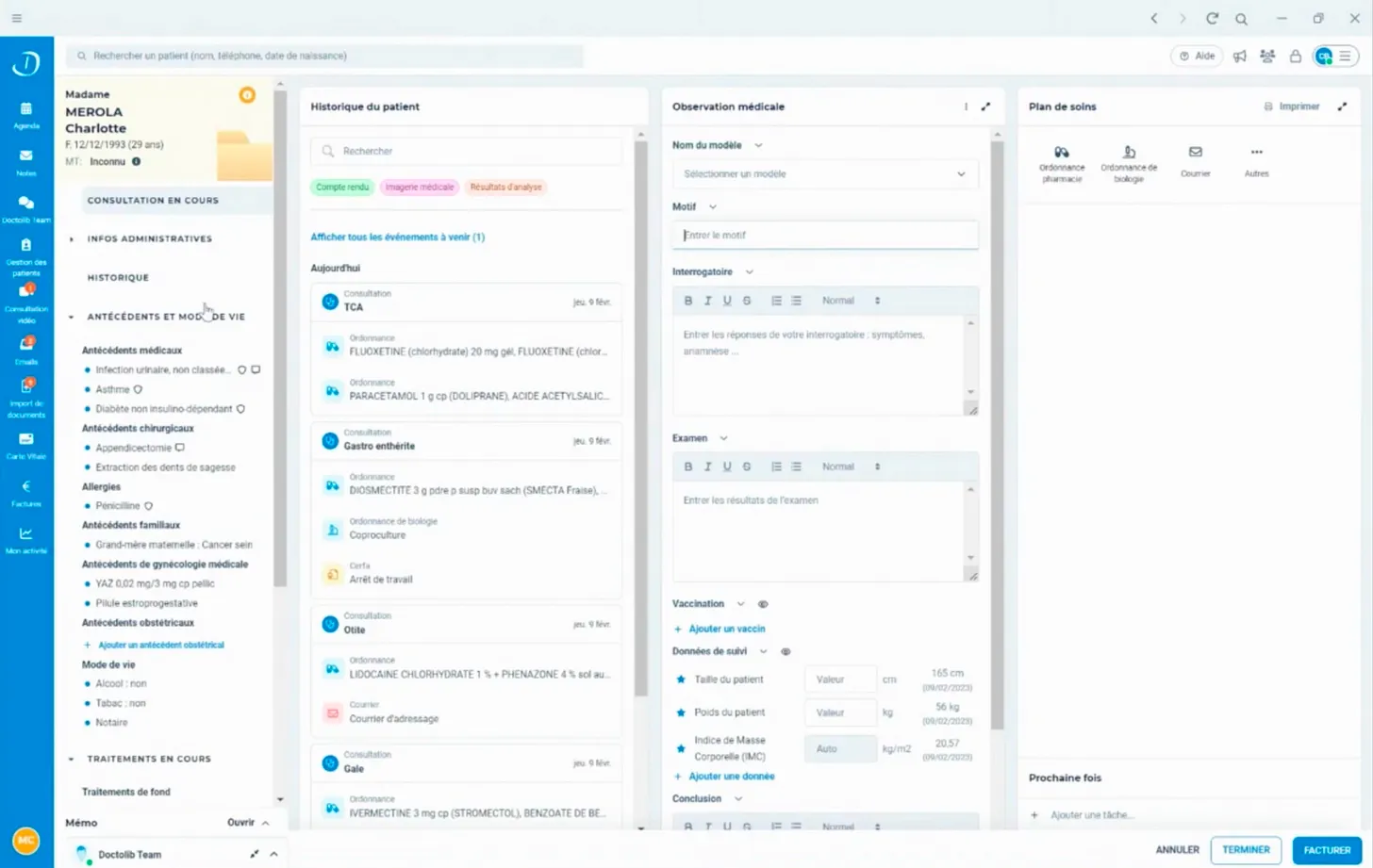
Application websites are also extremely useful in the health, wellness and professional services sectors. This type of system is now well established in the medical sector, particularly through booking platforms such as Doctolib.
A health centre, clinic or private practice can therefore offer:
• An online calendar, shared among the various practitioners.
• A booking interface for patients: choice of doctor, appointment time, immediate confirmation.
• Automatic reminders by text message or WhatsApp before each appointment.
• A secure access to the history of the patient’s (previous appointments, prescriptions, test results).
4. Key Benefits of a Web Application
Building an application website is about much more than just having an attractive online presence. It’s developing a digital tool, accessible at any time, which improves the efficiency, coordination and reputation of your organisation. Here are the main benefits:
4.1 Digitisation of internal processes
A web application makes it possible to automate tasks that used to be done manually: processing paper forms, managing disorganised Excel spreadsheets, making follow-up calls… everything is centralised online.
Example: An organisation managing several projects across different regions can monitor activities on the ground using digital forms completed by local staff, with consolidated reports generated automatically.
Result: time savings, fewer errors, and better decision-making.
4.2 Centralised data management and secure access
The data (users, projects, applications, bookings, etc.) is stored in a centralised database, with secure access depending on their roles: administrators, moderators, users.
Example: A portal for a sports federation can store information on all members (clubs, athletes, coaches) and feature a dashboard for regional federations and restricted access rights for clubs.
This ensures confidentiality, traceability of actions, and a unified management.
4.3 Improved collaboration between teams
A web application makes collaborative work easier: several people can access the same tools, comment on projects, update statuses and exchange information in real time.
Example: An NGO with teams in Conakry, Labé and Nzérékoré can track progress by area in a single platform, rather than managing dozens of files via email or WhatsApp.
4.4 24-hour availability and mobile access
Your tool is available all the time, even outside office hours. Furthermore, it may be optimised for mobile, which is essential in Guinea, where the majority of users access the internet via smartphone.
Example: A training website can be accessed in the evenings, at weekends, or even offline via certain integrations, which boosts user engagement.
4.5 A modern and credible image
Having a well-designed website demonstrates that your organisation is well-organised, modern and forward-looking. This enhances credibility with donors, technical partners and even service users.
Example: An enrolment management platform for an educational programme gives parents and institutions the assurance that the programme is well-organised and reliable.
5. Who are web applications for?
A web application isn’t just for large companies. It can become a strategic tool for many organisations in Guinea and West Africa, provided that they have specific management, interaction or automation requirements. Here are a few typical profiles that could benefit from such a website:
5.1 NGOs and funded projects
When you need to manage multiple activities in the field, produce regular reports, monitor key performance indicators, issue calls for proposals or collect applications, an application site becomes a fully-fledged online back office.
Concrete example: An environmental NGO can incorporate an interactive map of its areas of operation, a project monitoring dashboard, and a secure portal for submitting reports.
5.2 Educational institutions and training centres
Private schools, training centres or educational programmes can use a web application to manage enrolments, timetables, marks, homework, certificates, etc.
Concrete example: A training centre for young entrepreneurs could offer a portal featuring tutorial videos, assessments, a members’ area and an automated certification system.
5.3 Public or quasi-public bodies
Local councils, chambers of commerce, development agencies and public bodies can use a web application to to facilitate their dealings with members of the public or professionals, via online procedures (submitting applications, making complaints, registering, etc.).
Example: A local council can set up an online system for requesting administrative documents (such as birth certificates and certificates of residence) that allows users to track the status of their application.
5.4 Growing businesses
As soon as a company starts to structurate its operations (customer management, sales tracking, human resources, after-sales service, etc.), a web application can be designed as a centralised, bespoke interface.
Example: A service company may have a customer portal providing access to invoices, a service schedule, and a ticketing system for technical support.
5.5 Professional associations, trade unions, federations
These organisations often need to map their members, to publish internal documents, to communicate internally and to gather feedback. An application site provides them with visibility, coordination and consistency.
Example: A trade association may have a searchable directory, a members’ area, industry news, and an internal messaging system.